Robinson Crusoe's memoirs form "the most fascinating boy's book ever written", wrote Leslie Stephen. This self-help book, within a matter of decades, had reached an audience as wide as any book ever written in English. Edited by Daniel...
moreRobinson Crusoe's memoirs form "the most fascinating boy's book ever written", wrote Leslie Stephen. This self-help book, within a matter of decades, had reached an audience as wide as any book ever written in English. Edited by Daniel Defoe, it had become part of the literary consciousness of European civilization. For three centuries, there has been a need for studies summarizing the related intriguing scientific issues in the fields of history, geography, cartography, astronomy, geology, botany, zoology, climatology, archaeology, anthropology, ethnology, and linguistics. If the story is true, readers are curious to follow it on maps. The world calls one of Juan Fernández Islands of Chile as Isla Robinson Crusoe, without much evidence. Rather, Cocos Island of Costa Rica seems a better candidate for scientists, based on Crusoe's observations about latitude, lunitidal records, climate, flora, fauna, topographic features, and his map of 1719. A later map of Cocos Island, from Stevenson's Treasure Island, is briefly mentioned. Crusoe's travels through China, Russia, and the Pyrenees offer unique geographic information by dozens of toponyms. Different editions of the book's three parts contain a few misprints in geographical names. His travel route is compared with that of ambassador Ides and many contemporary maps. Three centuries ago, based on the complaints and optical reasoning of a blind man, the world hastily categorized Crusoe's autobiography as a fiction, the first English novel. The stubborn fact remains that the heroes, the story, the location and details of the island, or the words of Friday are historical.

















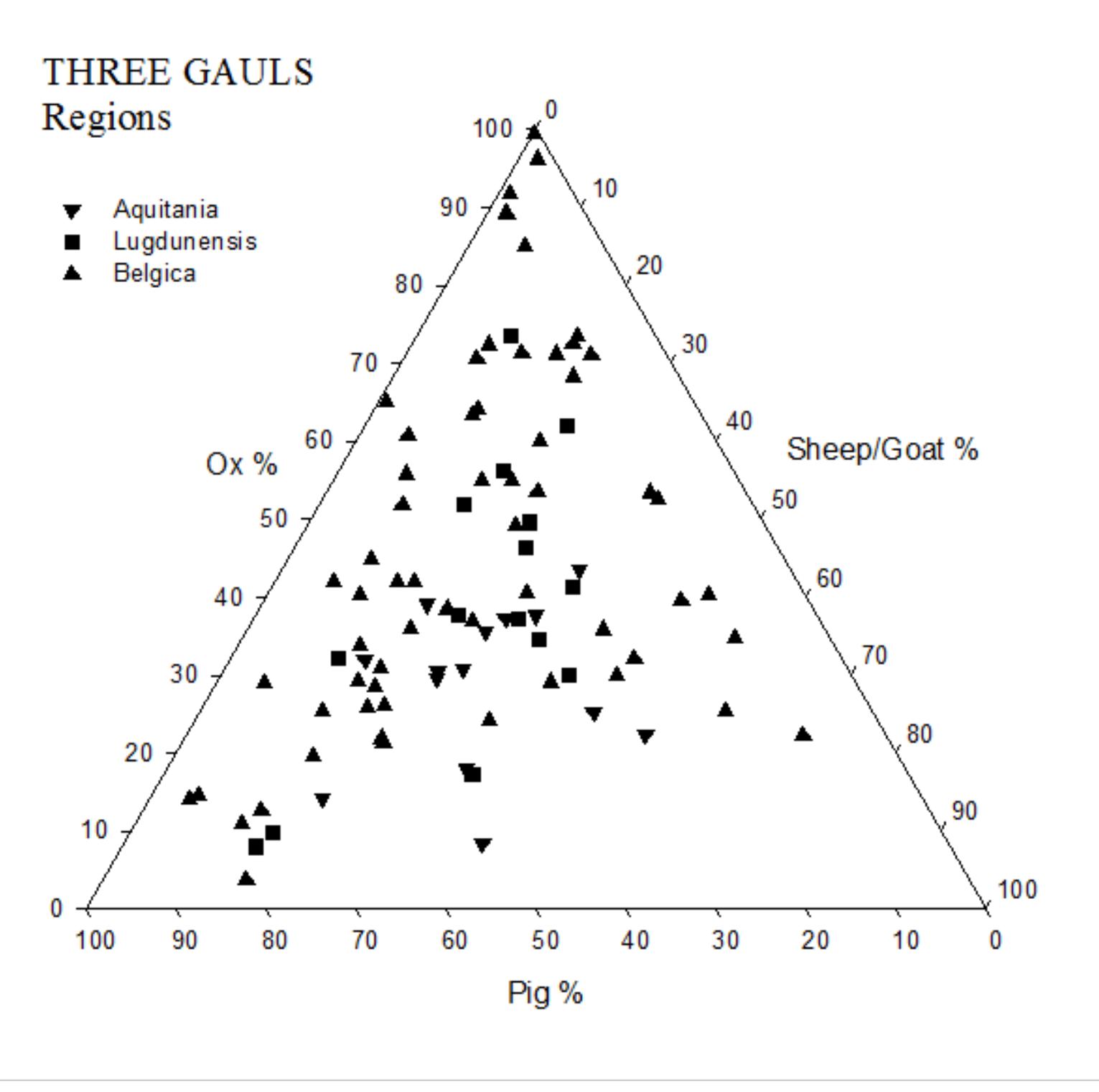


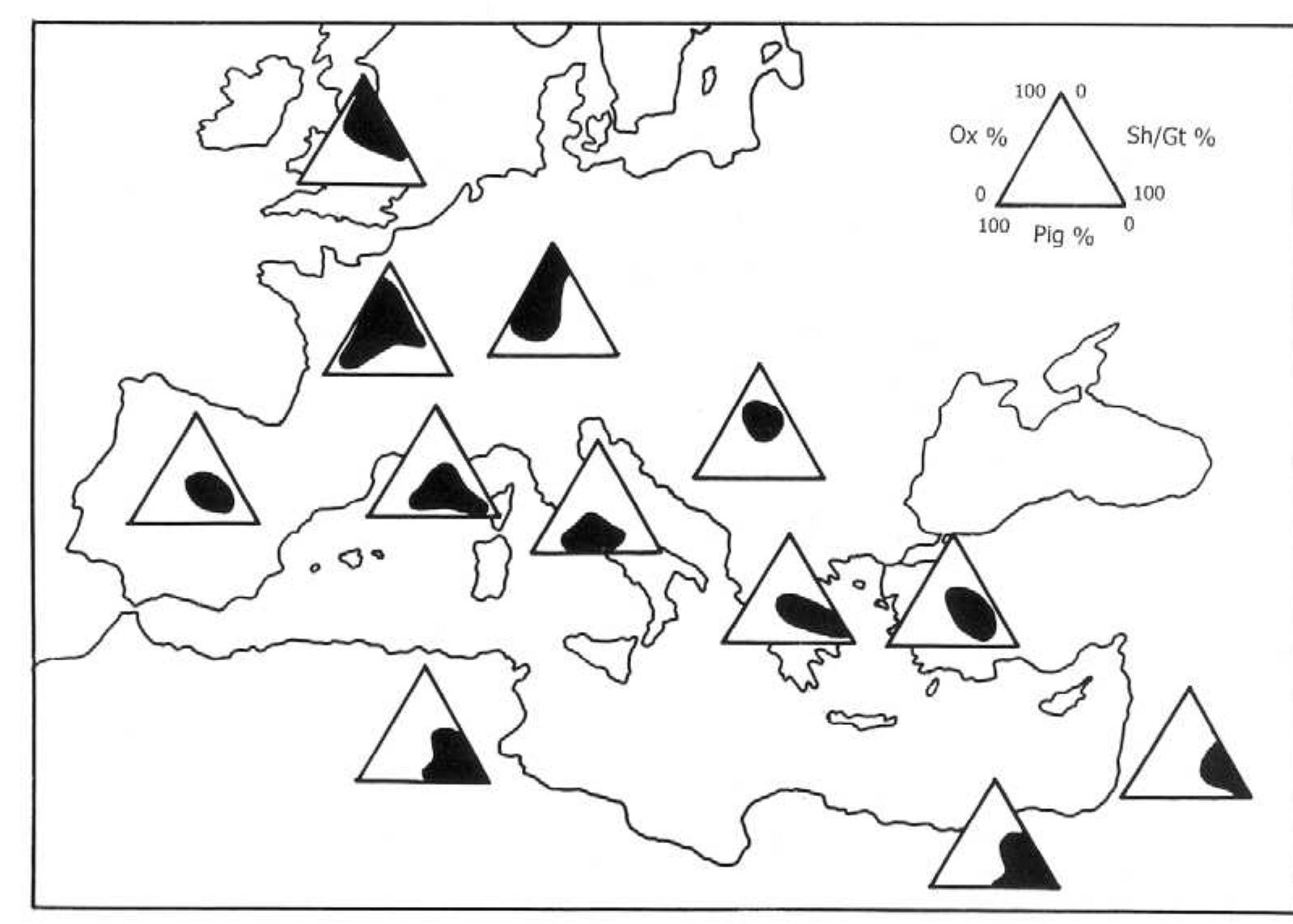


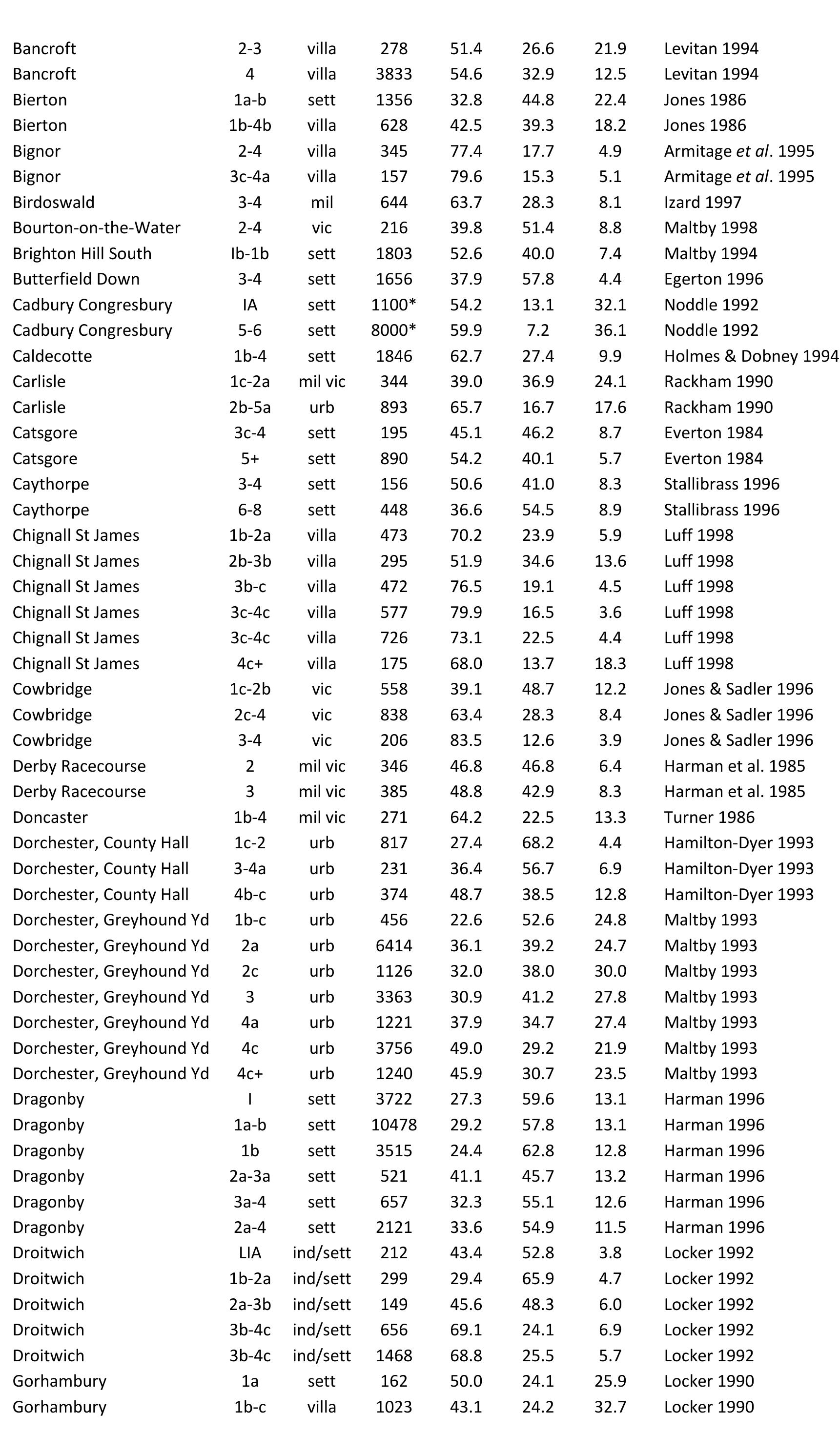
![Table 2 Gaul: statistics of the bone assemblages on Figs 6-8 Britain This region has many faunal remains assemblages (Fig. 8), and the new data in the Appendix, Table E, reinforce the conclusions previously drawn in King (1978; 1984), which only need to be set out in outline here. It is possible to show that the Gallic/German pattern, probably already established as the military dietary pattern, became the standard for dietary change in the new province (King 1984, 190-2, 198). The indigenous dietary pattern in the Late Iron Age is largely one of high sheep percentages (Hambleton 1998). The sites in Britain show that the [179] {Figs 9 & 10 here} [180] high cattle/high pig pattern correlates with the apparent 'Romanized' nature of the sites. There is a gradient towards higher average cattle and pig percentages that goes in the sequence; rural settlements, villas, secondary urban centres, urban sites, military sites, legionary sites (Table 3; King 1984, 189-90; 1999, Fig. 1). This appears to show that the urban, military and legionary sites set a dietary pattern, presumably derived from Gaul and Germany, that was emulated by social groups seeking to become more Romanized. This was a process that achieved some success by the late Roman period, since the high cattle/high pig pattern eventually comes to dominate all site types by the late Roman period (King 1984, 193-4). However, there was always a residual dietary pattern that looked back to the pre-Roman high sheep assemblages. Many rural settlements i.e. non-villas) retained this pattern to some degree, and it is interesting to note that in the post-Roman period, there was ultimately (but not immediately) a more general reversion to high sheep/goat percentages in bone assemblages (King 1978). In this respect, Romanization was not complete, and as in other provinces, regional patterns were able to retain a significant hold on the diet.](https://figures.academia-assets.com/39123274/table_002.jpg)
![Table 3 Britain and Germany: statistics of the bone assemblages on Figs 9-10 Germany, Raetia ana Noricum Generally, these regions have the same pattern as the Three Gauls, forming with them a large zone north and west of the Alps that was beef and (to a lesser extent) pork dominated (Fig. 10). However, beef was more common on sites in Germany, particularly in Germania Inferior and the lower Rhineland. In this area, there are many sites of all categories with 60% or more cattle bones. [181] {Figs 11 & 12 here} [182]](https://figures.academia-assets.com/39123274/table_003.jpg)
![Table 5 Eastern and African Sites: statistics of the bone assemblages on Figs 13-15 & 17 It is also clear that communities of other religions at this time exercised dietary preferences that led to a higher incidence of pork consumption. The Hellenistic levels at Tel Anafa are notable in this respect, since the excavators uncovered a large Greek-style courtyard house, together with luxury imports. This coincides with a relatively high pig percentage, increased beef consumption and greater hunting activity (Redding 1994). It is a high-status Hellenistic pattern that can be linked with assemblages from Greece and eastern Turkey. Interestingly, in the succeeding period, there is lower status occupation and a corresponding increase in sheep and goat numbers, together with a decline in pork consumption. This hints at an imported lifestyle and dietary preference for the Hellenistic period at this site, which was not sustained when the site's status declined. [186] {Figs 15 & 16 here} [187] that led to a higher incidence of pork consumption. The Hellenistic levels at Tel Anafa are case throughout ancient Palestine, however, since other sites do have pig bones, for instance in the Jordan Valley at Tel Anafa (Redding 1994) and adjacent to the Jezreel Valley at Tel Yoqne'am (Horwitz & Dahan 1996). It has also been noted by commentators on the biblical and Talmudic references that pigs were kept in the region, for instance in the Sea of Galilee and Golan areas (Urman 1985, 149; Safrai 1994, 172-3). It is also relevant to note that Jerusalem itself has a very slight presence of pig bones in Iron Age and earlier levels at the City of David sites (Horwitz 1996). It may therefore be the case that the strict application of a ban on pork consumption was at its strongest after this, i.e. in the late first millennium BC and early Imperial periods.](https://figures.academia-assets.com/39123274/table_004.jpg)
















![Fig. 1. The agger on the Esquiline. The dotted line represents its hypothetical course. 1. External and internal wall near via Volturno; 2. Porta Viminalis; 3.Tufo del Palatino walls in McDonald’s; 4. Excavations of the older agger underneath platform 24; 5. Tufo giallo walls at piazza Fanti; 6. Area of San Vito (see Fig. 3); 7. Via Merulana no. 13, older agger noted by Lugli; 8. Area of Pinza’s Tomb LX]; 9. Tufo giallo walls in the Auditorium of Maecenas.](https://figures.academia-assets.com/97918282/figure_002.jpg)


