Maria Filomena Barata Janeiro de 2022 Este trabalho de recolha bibliográfica foi iniciado com o mestrado da signatária, em 1997, dedicado à cidade romana de Miróbriga, Santiago do Cacém, tendo sido parcialmente actualizado até...
moreMaria Filomena Barata
Janeiro de 2022
Este trabalho de recolha bibliográfica foi iniciado com o mestrado da signatária, em 1997, dedicado à cidade romana de Miróbriga, Santiago do Cacém, tendo sido parcialmente actualizado até Dezembro de 2022, data em que decidi publicá-lo, pese todas as lacunas que se possam vir a detetar, pois a tarefa é hercúlea.
Perdoar-me-ão os investigadores a incapacidade de não ter conseguido abraçar todos os trabalhos publicados sobre este tema.
Pese tratar-se de um trabalho que, tenho plena consciência, será sempre incompleto, pois está permanentemente desactualizado, fruto da constante investigação, atrevemo-me, ainda assim, a partilhar a informação recolhida, ao longo de anos, tendo em vista a sua consulta fundamentalmente por alunos e cidadãos que se interessem pela temática, pois não se trata de um estudo exaustivo sobre as Cidades Romanas, mas somente um livro de consulta, para quem as deseje conhecer melhor.
Optei pela chamada alfabética das cidades, sabendo que isso cria dificuldades a uma visão da sua distribuição geográfica, mas penso ser útil para quem faz uma procura direccionada e o recurso ao mapa ajudará a colmatar a dificuldade.
Na altura em que decidi dar-lhe corpo, pensava também na criação de uma rede das cidades da Lusitânia, a exemplo de outros Itinerários que tive a felicidade de poder acompanhar directamente, esperando que este trabalho pudesse contribuir para a elaboração de uma memória descritiva e uma caracterização sumária dos núcleos urbanos de origem romana. Infelizmente, apesar de ter existido temporariamente uma esperança que tal ideia se concretizasse, tal não aconteceu ainda.
No entanto, em fase recente já se consolidaram algumas experiências de constituição de redes, a exemplo do projecto Lisboa Romana – Felicitas Iulia Olisipo - e ainda o das cidades integradas na " Roma Atlantiaca’ . Em boa hora isso acontece.
Continua, no entanto, a sentir-se a falta da disponibilização de um banco de dados de toda a informação existente sobre as cidades e o território, em Época Romana.
Não posso, contudo, deixar de lembrar aqui todos os trabalhos pioneiros e incontornáveis de Jorge de Alarcão, de Vasco Mantas, de Carlos Fabião, e de outros investigadores, em torno da herança e das cidades romanas, inúmeras vezes mencionados neste levantamento bibliográfico. Mas também foram também pilares do conhecimento sobre a urbanidade outros trabalhos de grande envergadura que me acompanharam nos últimos anos, designadamente os mais recentes, como o Lusitânia Romana, Origem de dois Povos, Ciudad y foro en Lusitania Romana (Cidade e foro na Lusitânia Romana), T. Nogales Basarrate (Ed.). 2010. Mérida, ou do publicado em 2022, em torno das Ciudades Romanas de Hispania, também coordenado por Trinidad Nogales Basarrate.
Trata-se, assim, neste caso específico, apenas de uma sumária apresentação das cidades da Lusitânia que se localizam em território actualmente português, continuando a desejar que, no futuro, se consolide uma rede de conhecimento e de partilha pública de tão importantes vestígios do nosso território, bem como de toda a informação disponível a elas associada.
Felizmente, muitíssimo trabalho se tem publicado, nos últimos anos, em torno das cidades. Mas, por se tratar, fundamentalmente, de uma recolha bibliográfica sobre as cidades, contruída para quem procura informação, não desisti, ainda assim, de o editar.
Será feita, em primeiro lugar, uma pequena contextualização sobre o Mundo Urbano e respectiva bibliografia geral e, junto a cada entrada específica, será então listada a bibliografia respectiva.
Gostaria de ter feito uma ficha síntese de cada uma delas, aliás iniciei-a, mas há demasiado tempo que trazia estes levantamentos comigo, tendo-os mesmo disponibilizado online, e não desejaria prolongar mais esta tarefa. Para futuros trabalhos poderei, após a sua publicação, partilhar todos os elementos que constam deste levantamento.
Tentarei, em paralelo, dar informação sobre os Museus ou Centros Interpretativos de proximidade que tenham acervo específico de cada uma das cidades, não esquecendo o Museu Nacional de Arqueologia, que, embora actualmente em fase de remodeção, ao abrigo do PRR, tem representadas nas suas colecções inúmeras cidades romanas, a exemblo de Balsa, Conimbriga, Olisipo, Troia, Myrtilis, Ammaia, entre outras.
A todos os colegas que apoiaram este trabalho - não podendo esquecer a constante Lídia Fernandes, por todos os seus contributos e, particularmente, no que respeita a Olisipo, que, dada a sua grandeza será assinada também com a sua colaboração, bem como Jacinta Bugalhão que me permitiu manter actualizada quanto à bibliografia sobre os trabalhos arqueológicos desenvolvidos em Lisboa, a Guilherme Cardoso, pelo apoio constante ao longo do tempo, a Jorge António, Lígia Rafael, José Carlos Quaresma, José Ruivo, Armando Redentor, Pedro Miguel Salvado e Jorge Oliveira - agradeço a pronta disponibilidade em contribuir com sugestões enriquecedoras.
Aos companheiros dos anos passados em Miróbriga, obrigada pela aprendizagem conjunta.
O meu agradecimento ainda a todos os arqueólogos cujas publicações são também a base de sustentação deste trabalho, pois sem a sua investigação esta síntese não existiria.
Agradeço ainda a Raul Losada e Lígia Rafael a disponibilidade que manifestaram em ceder para este trabalho algumas fotografias da sua autoria.






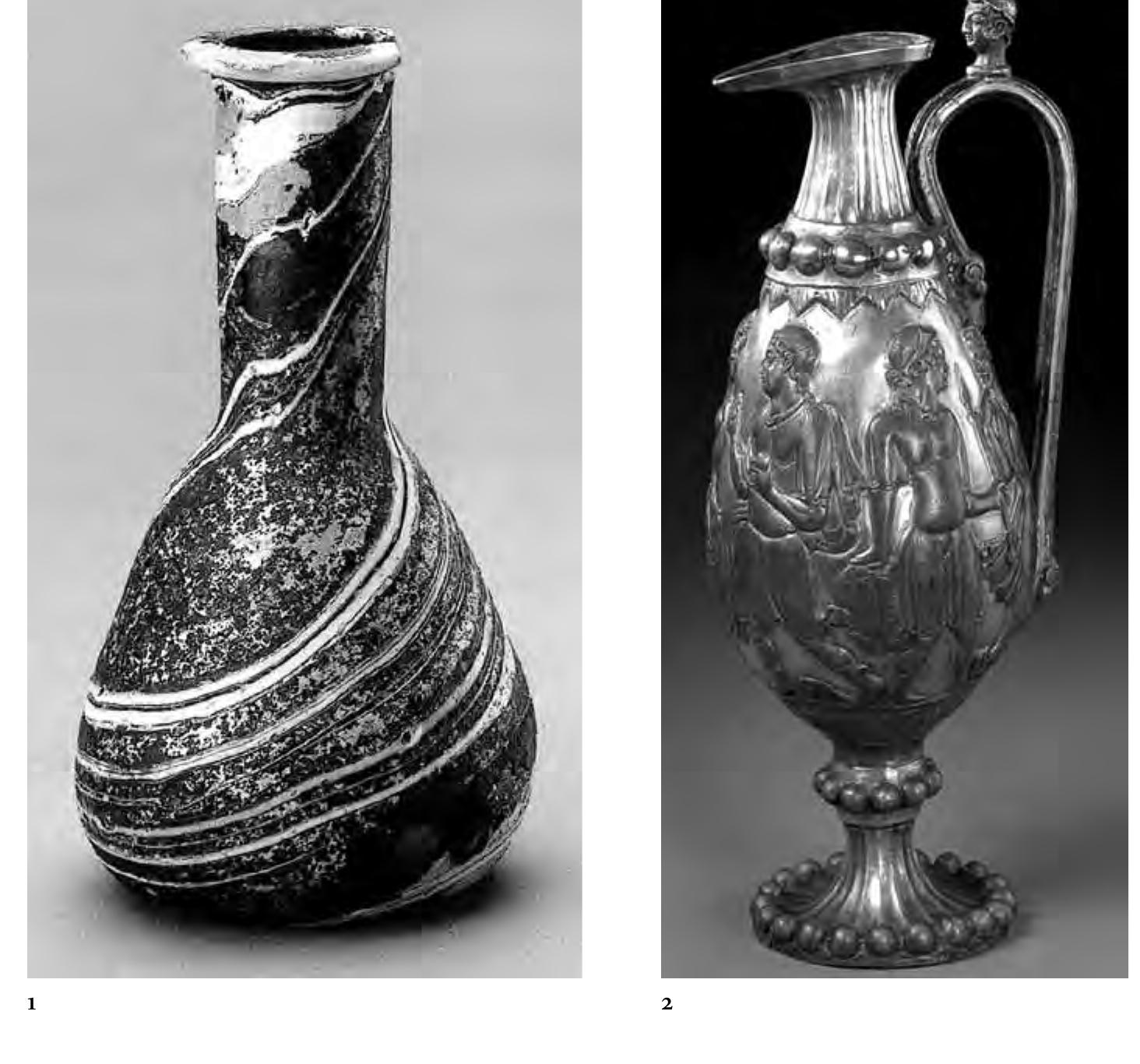










![_ Cup, Byzantine, discovered in Dune yn the Island of Gotland, Sweden, enth or eleventh century. Silver, 1eight 6 cm, diameter at lip 10.6 -m. Historiska Museet, Stockholm, 5849:5. From Andersson, Mediaeval Drinking Bowls, pl.154 Ettinghausen identifies three primary modes to characterize the way that Greco- Roman artistic models were employed in Sasanian art.” The first mode, “transfer, is an act of unmediated copying. It involves “taking over of shapes or concepts a: they stand, without change or further development.”* The second mode, “adop- tion,” refers to “artistic forms [that are] transferred from one region to another anc remodeled according to novel principles,” which “differ so much from their origi: nal configurations that their true identities become obscured.» As noted above, | define “adoption” in more neutral terms as any act of cross-cultural transmission Still, I endorse Ettinghausen’s concept, characterizing it as “adaptation” in ordet to emphasize the active reworking that I understand to be at the core of his defini: tion. He qualifies the third and final mode as “integration,” “a form of interchange [in which] it is difficult to say which is the giver and which the receiver.”® Feldmar identifies a similar dynamic at work in her material, characterizing the phenom. enon as a process of hybridization that produced a “supra-regional,” internationa visual language, in which “specific channels of foreign inspiration cannot be clearl} traced.” This category is not applicable within Byzantine uses of the feng huang but does resonate well with other situations of cross-cultural artistic interaction ir the premodern world.](https://figures.academia-assets.com/1721291/figure_076.jpg)


![Table 1 Certain and possible victors of the race for four-horse chariots at Olympia Most victors are known for the race of horses with rider: a) Nikagoras of Lindos in he late fourth or early third century; b) Pandion of Thessaly in 296 BC; c) Trygaios of in unknown city; d) Phylopidas of Thessaly; e) Amyntas of Thessaly; f) an unknown [hessalian who won three times — possibly identical with one of the three previous victors — all (c, d, e, f) during the career of Posidippus; g) M[...] of Crannon in [hessaly — also possibly to be identified with the unknown Thessalian — in 268 BC; und h) Pantarkes and i) Thrasonides, both of Elis, probably in the second half of the hird century. [31] Since the poem for Trygaios is incomplete, it is also possible that 1e won with a foal instead of with a full-grown horse. The race for foals with rider was introduced in 256 BC, when the victor was Hippokrates of Thessaly, according to Susebius’ victor list, or Tlepolemos of Lycia, according to Pausanias. [32] They »srobably both won a victory in this olympiad, perhaps in the race for full-grown 1orses and in the race for foals. One of the authors made a mistake while selecting nformation. Eusebius’ list is generally the more trustworthy source, but since the ntroduction of the new event is only mentioned in the Armenian version, not in the Sreek manuscript, this argument should not be pressed. No Ptolemaic roval victors are known outside the four-horse chariot races. At](https://figures.academia-assets.com/47546825/table_001.jpg)


![Work notes on the Zagreb Mummy - a survey of Etruscan Phrases texts BT-5 —ESIC Fe * Fe CLEFSINAS | follow to the end, follow to the grave, keep up (L. exsequor-sequi-sectus) of us (It. ce); | sail (L. veho-vehere) | sail (L. veho-vehere) of Clusium (Clusium-i, adj. Clusinus-a-um)]](https://figures.academia-assets.com/92603499/figure_011.jpg)
![Work notes on the Zagreb Mummy - a survey of Etruscan Phrases texts L371 (FVL)TES: ROTEM: TEV: AITEN: TAM VR__ of the aspect, face (L. vultus [voltus]-i) | rotate (L. roto-are; rotem, Conj. 1st pers. present; or of the wheel, chariot, rota-ae, Acc. Sing. “am” = “em”) god? (L. deus, divus, di, divi, dea, diva; It. dio, dia; Fr. dieu, dieux, deese) Medea? (L. Aeetine-es) to such a degree (L. tam) | speak (L. oro-are; Palaic, wer). Note the wheel at the top of the stele. L37 SOTER MERIO IS KAL ATNE of the savior (L. soter-eris; It. salvatore; Fr. saveur) Merio (Merius?) of it, that person or thing (L. is, ea, id) | call, summon (L. calo-are ) Etna (L. Aetna-ae and Aetne-es).](https://figures.academia-assets.com/92603499/figure_012.jpg)

![Work notes on the Zagreb Mummy - a survey of Etruscan Phrases texts 21192 ElIS* CEM NA Ce* IK* FELeRA*E TvNAM*TE SIM *E TvNAM to them (L. eis, gen. & dat. they; It. essi, esse, them) | groan (L. gemo, gemere, gemui, gemitum) indeed (L. ne [nae] tc us (It. ce) here; hereupon/in this place (L. hic) ); she is veiled / covered (It. velare; Fr. voiler); E TvNAM = from (L. e, ex) the thunder (L. tono-are-ui-itum; It. tuono, m.; Fr. tonnerre.m.) to you / yours | am (L. sim, subj.) E TvNAM = from (L. e, ex) the thunder (L. tono-are-ui-itum; It. tuono, m.; Fr. tonnerre.m.)] Note: FELeRA declines: FELeRE; see 21236 below and FELeRES, FELaRV. On the phrase SPVR TA EIS, "to them" see 21397.](https://figures.academia-assets.com/92603499/figure_015.jpg)
![AH-1--ECA: SeREN: __ this is (It. ecco, adv.) serene (It. sereno, m.; adj. serene, possibly an adverb, quietly, serenly) 21227 HV TERI* IPA* RVCV* PETeNA* AMA* NAC *CAL | have the lands (L. f. terra-ae); Ipa in that matter (L. ibi) or alternatively the ibis (L. ibis, genit. ibis & ibidis); | demand (L. rogo-are) ; the dish (L. patina-ae) she loves; | am born (L. nascor-i), | call/summon (L. calo-are). AH-3 TFA: IK NAC: (C from line AH6) the two (L. duo-ae-o; It. due; Fr. deux; Welsh, dau, dwy; Gr. Dyo; Persian, do) here (L. hic [and heic], hice; It. qui; Fr. ici) | am born, to be born (L. nascor-i)](https://figures.academia-assets.com/92603499/figure_016.jpg)
![(Script V, Vase from Vulci) V-1 - ECA EVS CE: NAC: ATRVM: 8eLER RFCE Behold! (L. en!, ecce!) the dawn (L. Eos) wherewith, wherefrom (L. old ablative of qui) | am born (L. nascor-ari, Ind. Pres. 1% pers. singl. nascé); the dark (L. ater, atra, atrum, 2"¢ Decl. singl. acc.) to pluck out, pull (L. velo, vellere, velli (vulsi, volsi) vulsum) or alternatively, the sailing ship (It. vellero) of the funeral pile (L. rogus-i, m.). Note: ATRVM declines: ATER, N404, ATRV, N311. Z1423 IN TVNAM* RESAN* 8eLER* FEIFES*RESERI to (L. in) the thunder (L. tonitrus [-us], Ath Decl. acc. singl., “um” = “am”); they reveal (L. resero-are) Veler; the long lived / enduring (L. vivax-acis) you were preserved (L. reservo-are) Note: For 8eLER see Z11, Z113, 2543, 2551, 2561, Z1423, V-6. (See V-6 at http://www.maravot.com/Translation ShortScripts a.html) 8eLEF at Script V suggests a name referring to the dead, “plucked out”?](https://figures.academia-assets.com/92603499/figure_018.jpg)


![[of] Ategerio (2nd Decl. Dat. singl. -o) Atijeries, Atijerius gens](https://figures.academia-assets.com/92603499/figure_025.jpg)


![(text from the Perugia Cippus, a history of Etruscan regents) http://www.maravot.com/Translation Perugia Cippus.html (TC108) VSCE *FELVS INA NV8 RESA®* LARV SLANSV * LAR Te the Osci (L. Osci-orum, an ancient people of Italy); the skin/fleece (L. vellus-eris - used here to refer to a map?) she sails over, navigates (L. inno-nare) of the new (L. novus-a-um; It. nuovo; Fr. neuf, nouveau) yield, surrender, return (It. resa, f.); the ghost/spectre/mask (L. larva [larua]-ae) | thin out (It. slanciare) or alternatively hurl myself/ bring out to myself (It. lanciare; Fr. se lancer, to rush); of the god (L. Lar, Laris, m.) of you/of yours (L. tibi; It. ti) Note: The Oscans occupied the territory south of Rome to Naples/Pompeii.](https://figures.academia-assets.com/92603499/figure_029.jpg)
![(TC271) VS*LARIS Ce*CVSV* VSI NAL the face (L. os, oris); from the gods (L. Lar, Laris, -is 2™ Decl. Abl. / Dat. pl.) to us (It. ce); | demand (L. causor-ari) the talk/faces (L. os, oris) of the fare/passage money (L. m. naulum-i)] Note: coins had the faces of the rulers on them. In Roman times the face on the coin, Caesar, was viewed and worshipped as a god. Here the comparison of the face of the gods and the face of the passage money would be logical.](https://figures.academia-assets.com/92603499/figure_030.jpg)


![Au-96 FILIK FAL *AM*VC_ the fruitful/succesful (L. felix-icis) valley (L. valles [vallis]-is) | love, wish (L. amo-are) | prophesy (L. auguror-ari, Ind. Pres. 1° Pers. singl. augurd; Welsh, argoel- ion, omen; Persian, ukhra; Alb. ogur) or alternatively “yes” (southern French “oc” for “oui,” yes)](https://figures.academia-assets.com/92603499/figure_033.jpg)


![CN-1 - EIFAS TELaMONOS (TELMVNVS) Ajax [son] of Telamon CN-3 - MENARFA (Gr. Athena)](https://figures.academia-assets.com/92603499/figure_068.jpg)





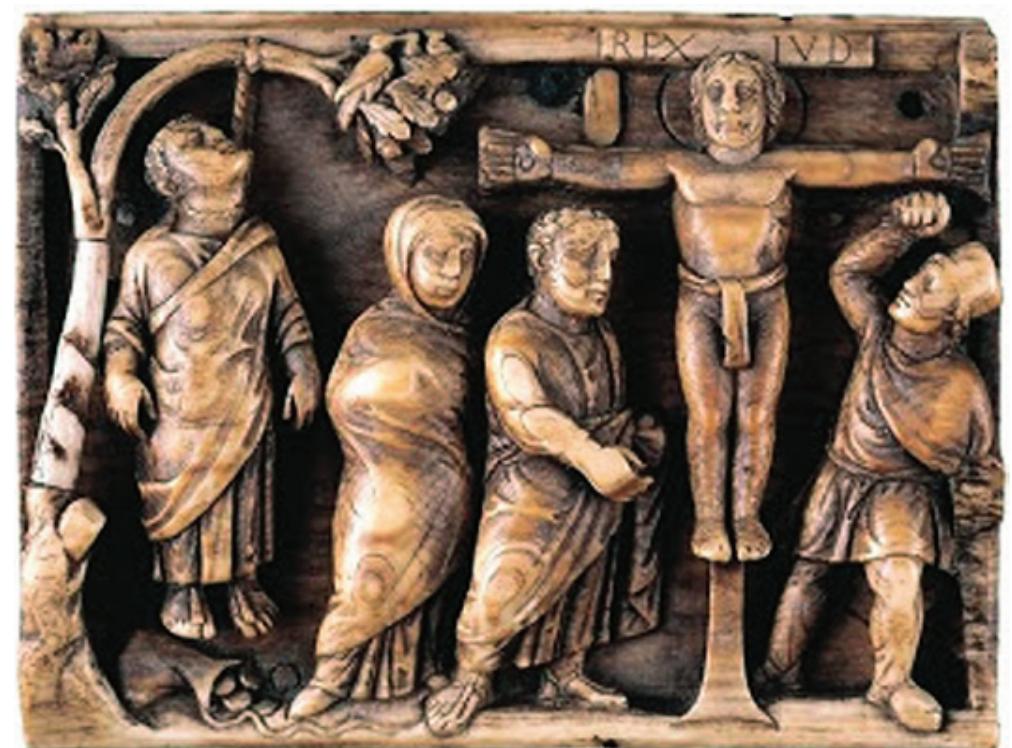
![Fig. 3. Sarcophagus of Junius Bassus, AD 359 (after K. Weitzmann [ed. ], Age of Spirituality, New York 1979, 42!](https://figures.academia-assets.com/101865596/figure_004.jpg)








![he Wars Most Peaceful: Militarism, Piety, and Constructions « Christian Manliness in the Theodosian Age Christian Manliness in the Theodosian Age It is the struggles of the athletes of piety [euoeBeiag GBANTWv] and their courage [avdpeiac] that endured so much, trophies won from demons, and over invisible enemies, and the crowns at the end of all, that will endure. Eusebius, HE 5.1.4 (my trans The Wars Most Peaceful: Militarism, Piety, and Constructions of](https://figures.academia-assets.com/35609213/figure_003.jpg)
![Contests of Virtue and Manliness in Procopius’ Gothic Wars Show them, therefore, as quickly as possible that they are Greeks’ [[paikoi] and unmanly [Gvavdpoi] by nature and are merely putting on a bold front when defeated, do not consent that this experiment of theirs proceed further. Procopius, Wars 8.23.25-26 (trans. Dewing). accomplishments of the heroes of ancient Greek and Roman literature.“ This chapter concentrates on one theatre of war, Italy, and examines how Procopius used the field of](https://figures.academia-assets.com/35609213/figure_004.jpg)