Laser welding will be an important welding process for different applications in aerospace , aircraft , automotive, electronics and other industries, due to its capabilities like minimum heat affected zone, welding of various...
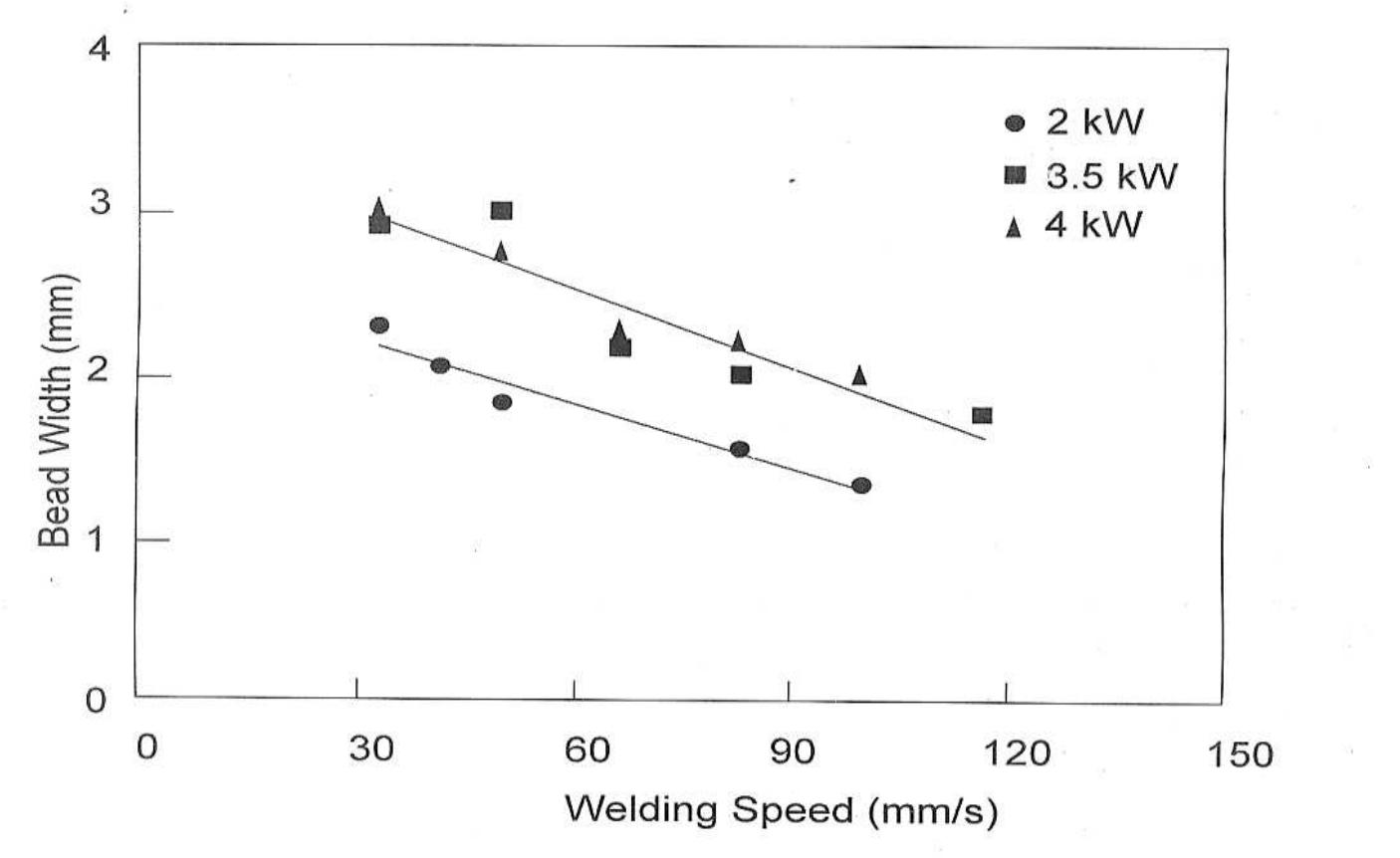
moreLaser welding will be an important welding process for different applications in aerospace , aircraft , automotive, electronics and other industries, due to its capabilities like minimum heat affected zone, welding of various thicknesses, adoptability to welding of various materials possessing widely varying physical properties like melting point, absorption, reflectivity etc. It utilizes laser source as a non contact heat generation technology to weld different materials so as to achieve welds of high quality narrow width and high penetration depths without the need of filler wires. It may be necessary to understand the effect of process parameters on the weldability of materials for successful welding. Laser welding popularly uses two types of lasers like CO2 and Nd:YAG (neodymium doped yttrium – aluminium – garnet) with different powers. Nd:YAG lasers are used to weld materials of different thicknesses involving powers upto 5 kW. Whereas, CO2 lasers are used for applications which involve higher powers upto 20 kW. Laser welding allows a direct transition from light energy into heat energy. This technique is involved with the process of laser - matter interaction in which various parameters such as pulse energy, pulse duration, spot size, welding speed, laser power, weld width, penetration depth, reflectivity, absorption coefficient, thermodynamic properties etc. are used for analysis. This paper presents a review of the different parameters including process as well as materials on the weldability of various materials like carbon steels, stainless steels, magnesium alloys, aluminium alloys, refractory materials such as vanadium, titanium, zirconium, tantalum etc. The selection of appropriate parameter for welding of specified material is discussed. The prominent weld defects common to the laser welding such as porosity, oxide inclusions, cracking, loss of alloying elements etc., are discussed as related to the microstructure as well as mechanical properties such as hardness, tensile strength and fatigue strength etc.




![Fig. 1. The mechanism for structural rearrangement in the spot model. The random displacement of a diffusing spot of free volume (dashed circle) causes affected particles to move as a block by an amount (A), followed by a relaxation under soft-core repulsion forces (B); the net co-operative motion combines these two steps (C). (Particle displacements are exaggerated for clarity.) Fioure from Ref [22].](https://figures.academia-assets.com/47641182/figure_001.jpg)
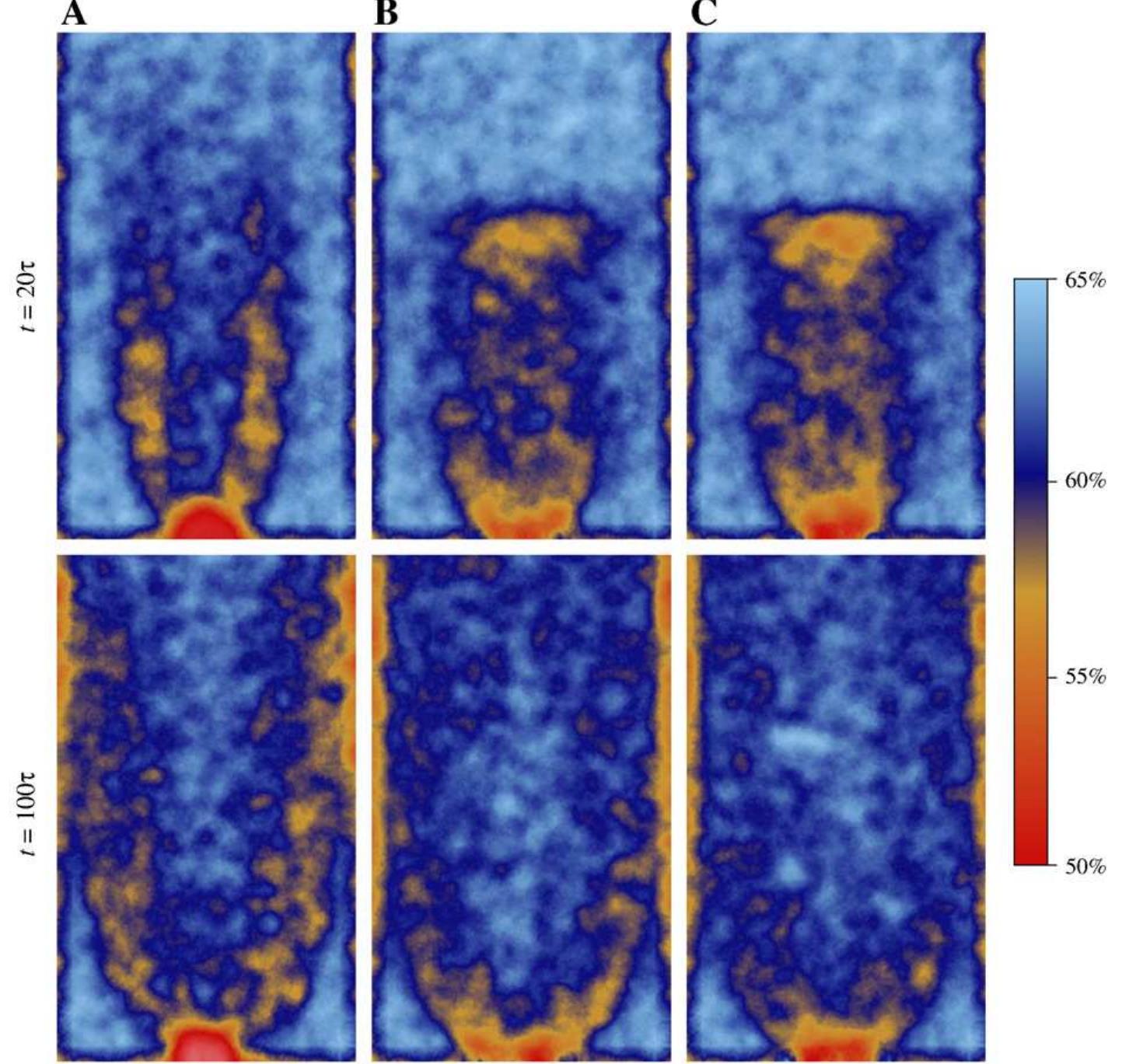
![Fig. 4. Snapshots of (A) DEM simulation, (B) a spot simulation using a random walk with simple biasing, (C) a spot simulation using simple biasing and influence weighting, and (D) spot simulation using adapted biasing (with (= 3) and influence weighting. The snapshots are taken at t= 300r. A further modification to the spot model can be employed to correct for this. In the previous implementation, when a spot moves by VV, then the particles experience a displacement —Vv/w, where w is a fixed quantity. Suppose that a spot is going to influence p particles, each of volume V,,. If spots are thought of as carrying a completely fixed amount of free volume V,, then another possible approach would be to let w=pV,/Vs, so the spot's influence is divided equally among the parti- cles in range. In the bulk, where the particles are roughly at constant In the void model, the evolution of the free surface has been addressed by making use of a very simple modification of the random walk process [11]. In the bulk of the packing, when a void generally has two particles in the lattice points above it, the void moves to each of these sites with equal probability. However, in the case when only one of these two sites is filled with a particle, the void always moves in](https://figures.academia-assets.com/47641182/figure_004.jpg)




![(a) The parameters used in the DEM simulation. (b) The five parameters used in the spot model simulations that were fitted from DEM simulation. All values are taken from Ref. [22]. The spot simulation was implemented in C++, with the main routine being written as part of a class that represents the entire simulation domain. For efficiency, the class divides the simulation up into a rectangular subgrid of regions, and keeps a separate list of position vectors of particles within each region. When particles are added to the container, they are sorted into the correct region. Two key routines are used to implement the spot microscopic mechanism. The first, spot (pV rs) applies the spot motion, by displacing all particles within a distance r, of p’ by an amount V. Table 1](https://figures.academia-assets.com/47641182/table_001.jpg)



![Fig. 1. A standard [10] tensile V-notch (TVN) sample made of AISI 4340 steel heat treated to 50-53 Rc](https://figures.academia-assets.com/53459721/figure_001.jpg)


![concentration of CO) at the end of the path is 34.81%. This will increase H,/CO at the end of the reactor path to 5.33. The optimal mixing structure is plug flow [12].](https://figures.academia-assets.com/45642159/figure_003.jpg)

![Staging with optimal distribution of heat transfer area, dis- tribution of syngas, and mixing configuration will increase the profit measure as demonstrated here. The results of this study can serve as initial points for staging of the FT reactor in the overall GTL process with different syngas production config- urations [23].](https://figures.academia-assets.com/45642159/figure_005.jpg)
![Table 1. Kinetic and adsorption parameters in Eqs. (2) and (3) [2].](https://figures.academia-assets.com/45642159/table_001.jpg)


![Fig. 5. Time variation of pressure coefficients. the air barrier is smooth compared to that across the panel. Consequently, the higher-frequency pressure fluctuations have been transferred to the rainscreen. Extensive analysis of the field data in the frequency domain has been recently presented in Ref. [12]. For simplicity, only the pressure coefficients applicable to the panel and rainscreen are discussed; one of the intentions of pressure equalization to reduce pressure load on the rainscreen is another good reason for presenting results in this format.](https://figures.academia-assets.com/66590541/figure_006.jpg)


![Note: ,=porosity of rainscreen, ; =effective porosity of air barrier estimated based on orifice plate- meter equation [10]. Comparison of full-scale measurements with the provisions in ENV 1991-2-4 for rainscreen walls with permeable air barrier](https://figures.academia-assets.com/66590541/table_002.jpg)
![Fig, 2, Frequency domain illustration of FM spectroscopy Fig. 1. A typical experimental arrangement for FM spectroscopy heterodyne) laser absorption spectroscopy with side- bands has been performed by Corcoran et al. [6], Mattick et al. [7], and Mager] et al. [8]. Heterodyne laser spectroscopy with amplitude modulated (AM) sidebands has been accomplished by Szabo [9] and Erickson [10]. Sideband techniques have recently been employed with great success to heterodyne detect signals from resonant degenerate four-wave mixing experiments [11-14]. Wavelength modulation spec- troscopy with lasers, as has been done by Hinkley and Kelley [15] and Tang and Telle [16], can be viewed as heterodyne spectroscopy with very closely spaced FM sidebands. Harris et al. [17] recognized that the ap- pearance of rf beats provides a sensitive indication of distortion of the output of an FM laser. However, the use of widely separated FM sidebands for optical heterodyne spectroscopy has only recently been ac- complished and exploitation of the attendant advan- tages of zero-background signal, rapid response to ransients, and laser limited resolution has only just begun.](https://figures.academia-assets.com/72857977/figure_001.jpg)


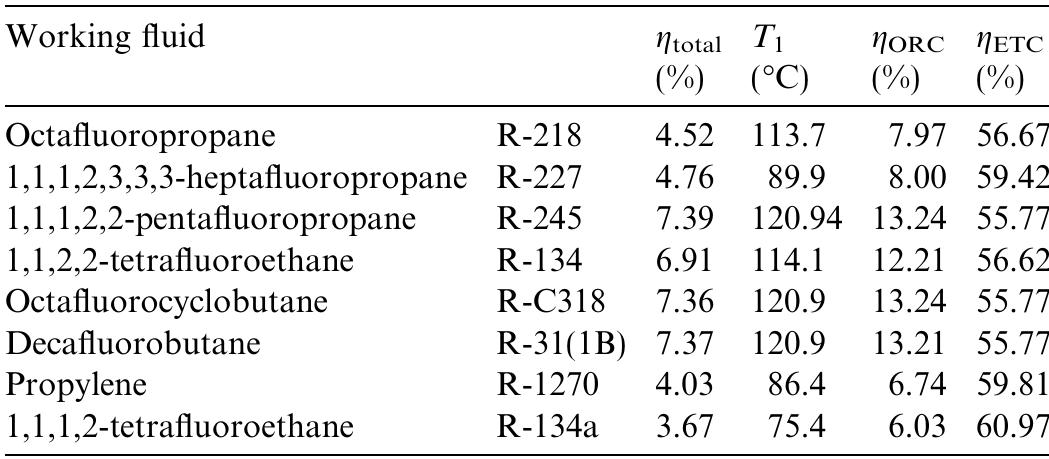
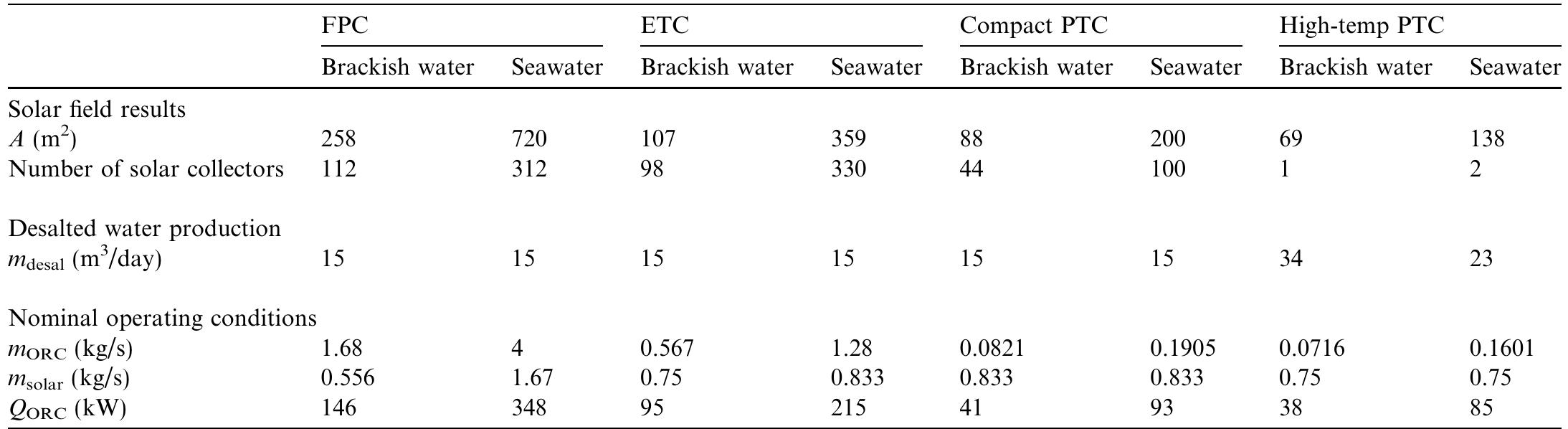
![Fig. 1. An integrated ORC-RO plant modelled with Aspen Plus. perature waste heat, geothermal heat, biomass, or solar energy. Many references to these applications are available in the literature. A couple of facilities with ORC plants using solar thermal energy were constructed in 1978 in Cadarache, France and in 1981 at El Hamrawin, Egypt, but unfortunately there has been little information pub- lished about them [7]. A commercial parabolic trough ORC power plant completed in 2006 in Arizona is of par- ticular interest. It is a 1 MWe plant using n-pentane as the working fluid for the ORC, and is based on plants used in geothermal applications having 10,340 m* of parabolic trough collectors [8]. Studies on ORC applications for desalination are very scarce although a few projects exist and some studies are available. The Vari-Power company, based in California, started to develop an RO-based desa- lination system driven by solar thermal energy [9,10]. A patented direct drive engine (DDE) converts heat to the hydraulic power required by the RO. To our present knowledge, this project is still in the pilot stage. In [11] it is proposed a solar ORC system using R-134a and evacu- ated tube collectors. The system efficiency is low (7%) but the authors considered it comparable to equivalent photo- voltaic desalination systems. The first laboratory test stmu- lating the heat provided by solar collectors has been given by Manolakos et al. [12]. Burgess and Lovegrove [13] dis- cussed the application of solar thermal powered desalina- tion using membrane and distillation technologies. One of their conclusions was that more detailed analyses of solar driven RO are required to determine its costs and applicability. In summary, existing research on solar ORC for desalination is very limited, and few efforts have been reported on determining the most useful working flu- ids for this application.](https://figures.academia-assets.com/44539148/figure_001.jpg)








![‘ig. 3. (Color online) Differences between the spectral reflectance curves associated with optimal colors and a real color. As goniochromism is the effect of abrupt color depending on the illumination/observation angle, it is interesting to consider whether these color varia- tions are inside or outside the Résch—MacAdam color solid and whether this depends on the pigment type, measurement geometry, or light source used. Provid- ing an answer to these two questions is the main objective of this work, i.e. to analyze the colorimetric characteristics of goniochromatic samples using the theoretical color solid associated with a standard observer and with different light sources associated with normal colors. This will make it possible to On the other hand, according to traditional color science, the colors distinguishable by the hu- man visual system define a three-dimensional (3D) structure called a color solid. The colors that define the limits are known as optimal colors and were stu- died by MacAdam [7,8]. These colors are associated with the normal reflectance/transmittance spectrum (photometric scale from 0 to 100%), with maximum colorfulness for a given luminance factor (Y, lower than 100%). The main characteristic of optimal col- ors is the shape of their reflectance curve. Its possible values are zero and one, with only two possible tran- sitions between these two values throughout the visible spectrum. Two types of optimal colors can therefore be distinguished: type 1, with a mountain- like spectral profile and type 2, with a valleylike spectral profile. However, a recent theorem has been proved from which the number of transitions](https://figures.academia-assets.com/49304167/figure_003.jpg)




![Fig. 3. RMSE atmospheric temperature profiles (left); surface temperature [K] world map provided by the official ECMWF model, http://www.ecmwf.int/| on March 4, 2008 (middle); and estimated surface temperature maps in California/Mexico area for several methods along with the averaged RMSE across the whole atmospheric column given in brackets.](https://figures.academia-assets.com/49714609/figure_005.jpg)


![MAIN CHARACTERISTICS OF THE DATA SETS THAT COMPOSE THE UCI BENCHMARK AND PERFORMANCE OF THE DIFFERENT (K)MVA FEATURE EXTRACTION METHODS. AS A FIGURE OF MERIT WE USE THE OVERALL ACCURACY (OA, [%]) + THE BINOMIAL STANDARD DEVIATION. BEST RESULTS FOR EACH PROBLEM ARE HIGHLIGHTED IN BOLDFACE. THE NUMBER OF EXTRACTED FEATURES IS INDICATED FOR PCA AND KPCA, WHEREAS ALL OTHER METHODS USE c — 1 FEATURES.](https://figures.academia-assets.com/49714609/table_003.jpg)


![Fig. 3. Forces and moments exciting the pump casing over one meshing period, expressed in reference frame 0,X/Y; at different output pressure values and rotational speec of 3000 rpm. model. In more details, the structural FE model includes the casing, the two end-plates (the lower one is indicated as flange and the upper one as cover), as well as the ergal plate to which the pump is fastened on the test bench and the four force sensors support- ing the plate. The casing and the two end-plates are meshed using tetrahedral elements as indicated in Table 2. The casing and the end-plates have different Young Modulus and density: the casing is in aluminium whereas the end-plates are made of steel. In the actual pump, the three components are fastened to- gether by means of two steel screws (M6, length 65mm) as shown in Fig. 4. The two screws, with proper tightening torque, guarantee the connection between the casing and the end-plates. The two screws are modelled as beam elements having the same cross section area and inertia properties of the actual screws joined to the surrounding mesh of the end-plate by means of interpolation spiders (Card RBE3 in MSC.Nastran [38]) as shown in Fig. 5a. This way, the motion of the two end-points of the beam element is defined as the weighted average of the motions of the surrounding mesh. The screw tightening torque is not applied to the screws in the model because it represents a static torque and therefore it gives no contribution in a dynamic analysis. More- over, the tightening torque produces the effect of joining the cas- ing surface to the end-plate surfaces. Therefore in order to model this effect, rigid spider connections (Card RBE2 in Nastran) are used in order to connect the casing surface with the end-plate surfaces as shown in Fig. 5a. Furthermore, the presence of bearing blocks, oil and relief valve is taken into account. Each of these components is modelled by means of a concentrated mass and an inertia momentum (Card CONM2 in Nastran) located in its centre of mass and connected to the surrounding mesh by means of interpolation spiders (Card RBE3 in Nastran). The ergal plate of the test bench is modelled using tetrahedral elements. The ergal plate is connected to the pump by means of two aluminium screws (Figs. 4 and 5a). These screws are modelled using beam elements - in the same way as for the steel screws - and are connected to the ergal plate and to the pump by means of interpolation spiders. Moreover, rigid spiders are used between the end-plate lower surface and the ergal plate surface for mod- elling the connection between the two surfaces and in order to avoid penetration between the surfaces themselves. Finally, the ergal plate is connected to ground by four triaxial force sensors located under the ergal plate. These sensors are modelled by means of spring elements having the nominal stiffness of each sensor as collected in Table 3; the spring elements are joined to the plate mesh by means of rigid spiders as depicted in Fig. 5b.](https://figures.academia-assets.com/43547903/figure_004.jpg)


![Fig. 6. (a) Input and output points in the FRF analysis and (b) experimental FRF amplitude for tests without oil and with oil at 23 bar with excitation in C and response in I along the X{, direction. Fig. 7 depicts the cavity mesh developed for the pump being studied, which has been coupled to the structural one for the solu- tion of the fluid-structural problem. The properties of the cavity mesh are reported in Table 2. The cavity mesh has the fluid prop- erties of the pumping oil (see Table 1), in particular the oil density and the oil bulk modulus have been introduced in the model in or- der to take into account the distributed mass and stiffness effects, respectively. Moreover the continuity of the mesh between the structural and fluid part has been imposed. In order to verify the effectiveness of the coupled fluid-structural FE model with respect to the genuine structural FE model described above, a numerica FRF analysis (SOL 111 in MSC.Nastran driven by LMS Virtual.Lab [38,41 ]) is carried out with excitation point in C and response point in B, along X‘ direction (see Fig. 6a). The numerical FRFs obtained by the fluid-structural FE model and the structural FE model are compared with the experimental FRF obtained by hammer and accelerometers (see Section 2.2). Fig. 8 depicts such a comparison in the frequency range of interest (1500-3500 Hz), where norma Moreover, on the fluid-structural FE model, a forced response analysis has been carried out (SOL 111 in MSC.Nastran) with the aim at obtaining the vibration level on the entire pump in opera- tional conditions. The excitations are the pressure forces and mo- ments and the bearing reactions exchanged between the gears and the casing (see Section 3.3 and Fig. 3) as well as the variable](https://figures.academia-assets.com/43547903/figure_007.jpg)


![Fig. 9. Distribution of Laircraft,p Observed by experts, for every acoustic environment. By applying the non-parametric Kruskal-Wallis test [22,23], the influence of several factors on the data distribution was studied. Afterwards, it was checked if the new variable, error, followed a Normal distribution, so that a parametric approach could be ap- plied for the analysis. The probability distribution of the residuals was analyzed using the Chi-square and the Kolmogorov-Smirnoff tests, and a Normal Probability Plot, It was evidenced that data were not distributed according to a Gaussian distribution, so a non-parametric approach had to be used. Fig. 10 shows the Normal probability plot for the residuals.](https://figures.academia-assets.com/41765820/figure_011.jpg)


![CFD Analysis And Optimization Of Geometrical Modifications Of Ahmed Body Manipulation of the rear slant angle of the generic Ahmed body reference model was carried out previously [2], to determine the optimum angle configuration for the least drag coefficient with velocity of air at inlet being 40m/s. The drag coefficient and the corresponding lift coefficient were plotted.The pressure distribution and velocity contours for the various rear slant angles were also investigated to comprehend the aerodynamic behavior around the model.](https://figures.academia-assets.com/47212464/figure_001.jpg)

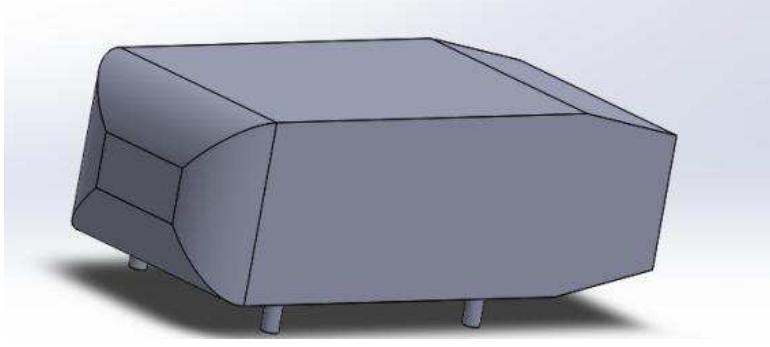


![Fig. 16- Roof camber: Lift vs. H/L ratio Fig. 15- Roof camber: Drag vs. H/L ratio ——'_' OO The analyses of the 22 multifarious models carried out yield optimum configurations for each geometrical modification of the benchmark model — Ahmed body having 10 degree rear slant angle. The values of the aerodynamic parameters obtained for the benchmark model are- Coefficient of drag (C4) = 0.238 and the coefficient of lift (C,) = 0.0848[2]. For all the configurations for a particular modification (obtained by varying the associated geometrical parameter),the drag and lift coefficients are plotted and examined to determine the optimum configuration resulting in least drag and lift coefficients. Furthermore, the underlying root causes are also analysed, comprehended and listed.](https://figures.academia-assets.com/47212464/figure_016.jpg)




![Fig. 2. Bioink types used in EBB: (A) cells loaded in hydrogels, (B) polymer micro-carriers pre-loaded with cells [63], (C) tissue spheroids made of cells and ECM [21], (D) cell pellet in nozzle tip [41], (E) tissue strands [29] and (F) dECM before loading cells [51].](https://figures.academia-assets.com/39997046/figure_002.jpg)

![Fig. 4. Bioprinting of vascular and vascularized tissue constructs: (A1) photograph of bioprinted agarose hydrogel filaments representing branched vascular network in a GelM/ hydrogel block and (A2) a high resolution cross-sectional view of GelMA block stained for live and dead cells (reproduced/adapted with permission from Ref. {25]); (B1) sprouting o endothelium (stained with red fluorescent protein) into capillary network (stained with green fluorescent protein) within fibrin gel on day 9 and (B2) a high resolution image of th capillary network on day 14 (reproduced/adapted with permission from Ref. [197]); (C) an image acquired during evacuation of the fugitive ink showing channels in GelMA scaffolt (upper-left) which were later glued with 10T¥ fibroblasts, HUVECs and human dermal fibroblasts (HUDFs) (reproduced/adapted with permission from Ref. |27]); (D1) a scannin, electron microscopy image of directly bioprinted vascular channels embedded in a large alginate construct (D2) showing L929 mouse fibroblasts in green (reproduced/adapted wit! permission from Ref. | 190]); (E1) scaffold-free bioprinting of a branched vascular network using 300 um human skin fibroblast (HSF) spheroids (solid and broken arrows show 1. and 0.9 mm in vascular diameter, respectively), where spheroids (E2) fuse and maturate into tissue after 6 days of deposition (reproduced/adapted with permission from Ref. [21}) (F) fabrication of a perfusable tissue via integration of bioprinted vasculature and fibroblast tissue strands (reproduced/adapted with permission from Ref. [29]), the scare ba corresponds to 2 mm on the right figure. (For interpretation of the references to color in this figure legend, the reader is referred to the web version of this article.)](https://figures.academia-assets.com/39997046/figure_004.jpg)

![Fig. 6. 3D printed cyborg ears: (A) bioprinting of anatomically correct cartilage scaffold loaded with chondrocytes along with printing of coil antenna; (B) scaffolds were cultured 10 weeks, resulting in neocartilaginous tissue in alginate matrix, (C) 3D printed complementary ears (right and left) demonstrated the ability to listen to stereophonic audio music (reproduced/adapted with permission from Ref. [218)}). Due to its unique capabilities, EBB has been preferred for fabrication of living tissues and organs, and regulatory issues seem to be down the way as the technology transforms into products for clinics and human-use purposes. Currently, there is no regulations that has been laid down for bioprinting including bioink, bio- printers and bioprinted products such as tissues, and FDA has not imposed any regulatory restrictions on bioprinting technology yet. Cutting-edge technologies such as bioprinting cannot be easily categorized for regulatory purposes while it does not fit into the general classification of “device”, “drug” or “biologic” under FDA regulations. Office of Combination Products (OCP) formed by FDA can handle this situation, where “combination product” is defined in 21 CFR §3.2(e) as “A product comprised of two or more regulated components, i.e., drug/device, biologic/device, drug/biologic or drug/device/biologic, that are physically, chemically, or otherwise combined or mixed and produced as a single entity” [221]. The OCP does not conduct product reviews but assigns combination prod- ucts to the appropriate FDA center (i.e., the Center for Drug Eval- uation and Research (CDER), The Center for Biologics Evaluation One of the major shortcomings of EBB is the lack of high- resolution systems due to the nature of the extrusion process it- self. Although certain errors can be induced due to other system components, such as errors associated with the motion system or the extrusion process itself has an enormous contribution to the low resolution. Although very small nozzle tips can be considered possible, decreasing the nozzle size results in a considerable increase in the shear stress and corresponding cell damage and death. Thus, EBB systems should be modified to alleviate this issue. In addition, lowering the size further increases issues such as nozzle clogging and the need for elevated dispensing pressure levels. Although a low electric field can be applied to reduce the size of the printed fila- ments as widely used in electrohydrodynamic printing [53], cells should be kept away from the electric field to safely deliver them. A recent approach in the application of electrohydrodynamic jetting in inkjet-based bioprinting demonstrates the safe usage of the system with cells; this approach has the potential to be used in EBB [54]. The other potential of increasing the resolution is to use a cone-shaped nozzle (i.e., Taylor cone or regular cone) that has a relatively allevi- ated shear stress, which reaches its maximum at the end of the nozzle tip, affecting cells at a minimum duration. In addition to these approaches, a highly innovative approach might be using a nozzle- free extrusion system that enables the bioink to overcome surface- tension-induced droplet formation.](https://figures.academia-assets.com/39997046/figure_006.jpg)


