T he functional and esthetic restoration of severely damaged endodontically treated teeth is still a clinical challenge. 1 A typical protocol to restore these teeth is to use posts and cores and a full-coverage crown. However, with the...
moreT he functional and esthetic restoration of severely damaged endodontically treated teeth is still a clinical challenge. 1 A typical protocol to restore these teeth is to use posts and cores and a full-coverage crown. However, with the development of adhesive dentistry, this goal is easily made feasible by an endocrown. 2 An endocrown is a one-piece, post-free ceramic restoration that assemble the crown and the pulpal cavity part in one component. 3 In comparison to the classical post-and-core approach, this modern alternative treatment modality offers several advantages, such as more preservation of tooth structure, less need for sufficient interocclusal space, reduced risk of root fracture, and possibility of retreatment in case of endodontic failure. Moreover, both the number of appointments and the cost decrease, as there is no need for the many technical steps for post cementation, core build up, and potential crown lengthening. 4,5 A systematic review done by Wittneben et al 6 revealed an overall survival rate of 91.6% after 5 years for computer-aided design/computer-assisted manufacture (CAD/CAM) single-tooth restorations, which is considered clinically similar to conventional restorations. However, the lowest rate was found in endocrowns (82.3%). This Purpose: To evaluate and compare the internal and marginal adaptations of chairside CAD/CAM (CEREC) endocrowns and crowns fabricated from lithium disilicate glass-ceramic (IPS e.max CAD), zirconia-reinforced lithium silicate glass-ceramic (VITA Suprinity), and hybrid ceramic (VITA Enamic). Materials and Methods: Dental models of the two first maxillary molars were selected. One was prepared for an endocrown, and the other for a standard all-ceramic crown. A total of 72 CAD/CAM restorations, including 36 endocrowns and 36 crowns made of IPS e.max CAD, VITA Suprinity, and VITA Enamic (n = 12 each), were fabricated. Discrepancies were measured in the buccal, mesial, lingual, and distal aspects of three sites (marginal, midaxial wall, and occlusal/floor) using the noncontact ATOS scanner. Statistical analysis was performed using MANOVA and between-subject effects tests (α = .05). Results: Mesial axial wall discrepancy was significantly lower in endocrowns compared to occlusal discrepancy in crowns, while distal axial wall discrepancy was significantly higher. Moreover, floor discrepancy was found to be significantly lower in endocrowns compared to occlusal discrepancy in crowns. However, type of material had no significant effect on any kind of discrepancy. Conclusion: The marginal and internal adaptation values were within a clinically acceptable range for both kinds of restoration and all three materials. However, restoration type (crown vs endocrown) was significantly different in the mesial and distal axial wall and occlusal/floor discrepancies, regardless of restoration material.









![Table 1. Overview of ceramic materials. Classification, mechanical properties a lL. -f 21]](https://figures.academia-assets.com/70645629/table_002.jpg)




![TABLEI AO classification [5]](https://figures.academia-assets.com/39639386/table_001.jpg)








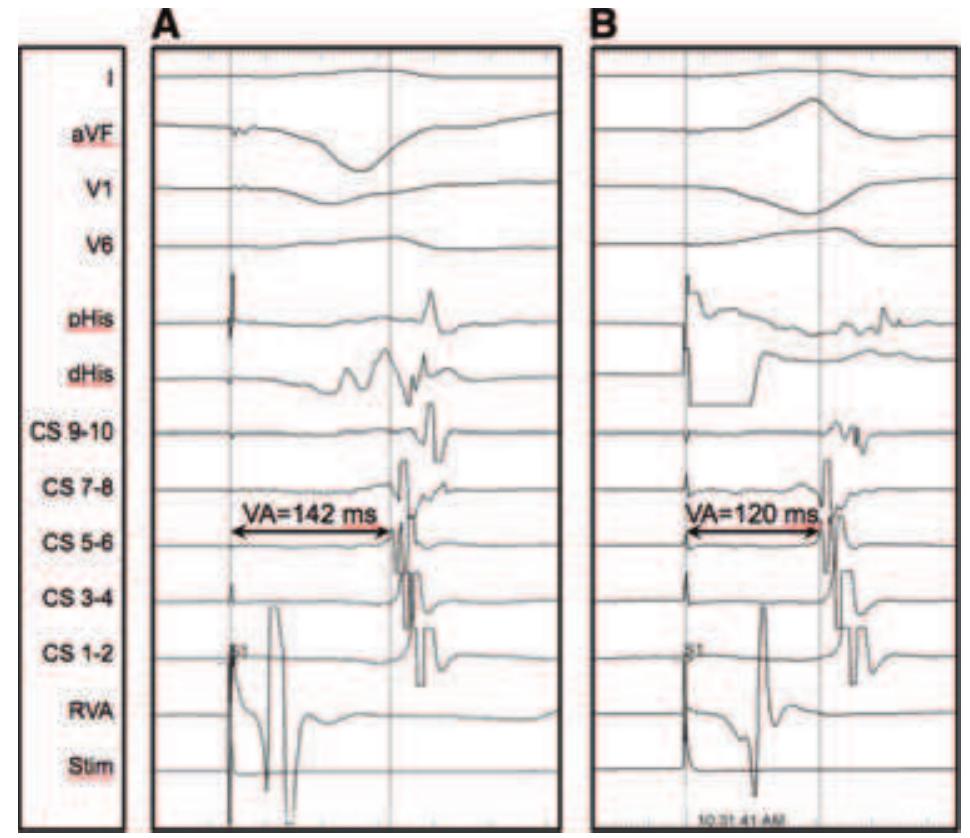
![Figure 3. Responses to para-Hisian pacing. In both panels, pacing is being performed from the distal poles of the His catheter (dHis). The first beat in each panel captures the His bundle and local ventricular myocardium (narrow QRS complex), whereas the second beat loses His capture and only stimulates ven- tricular myocardium. Panel A shows the response when retrograde conduction is occurring over a concealed accessory pathway; with loss of His capture there is no change in the SA interval (the time from stimulus [dotted line] to earliest atrial activation [dashed line]), nor is there a change in the atrial activation sequence. In this case, a right para-Hisian pathway was present, with earliest atrial activation on the HRA catheter. Panel B shows the response after successful ablation of the accessory pathway, demonstrating the response when purely AV nodal retrograde conduction is present. With loss of His capture the SA interval extends by 61 ms since the stimulated wavefront must now travel through ventricular myocardium, penetrate the distal branches of the His-Purkinje system, then travel retrogradely through the AV node. Earliest atrial activation is tied between the proximal bipole of the His catheter (pHis) and the CS os (CS 9-10). HRA = high right atrium; CS = coronary sinus; RVA = right ventricular apex; QRSd = QRS complex duration (ms); SA = time from stimulus to atrial electrogram (ms).](https://figures.academia-assets.com/36312953/figure_003.jpg)

![Figure 6. PAC response in AVNRT. Panel A: During supraventricular tachycardia with cycle length of 412 ms ana simultaneous atrial and ventricular activation, a paced atrial premature beat (APB) is delivered by electrodes ai the ostium of the coronary sinus (pCS) timed to junctional (His) refractoriness. The arrow points to the local atria: activation (A) occurring at the expected time of His bundle depolarization ([H]). Delay of the subsequent His by 16 m: indicates a diagnosis of atrioventricular nodal reentry tachycardia (AVNRT) where the APB prematurely activated the slow AVN pathway, delaying the subsequent beat due to decremental conduction slowing. Panel B: Schematic depiction of this response in AVNRT—the paced wavefront (square wave & solid arrow) can enter the excitable gap ir the AV nodal circuit and activate the slow pathway. Delay of the subsequent His timing (as shown in Panel A) shoulda be specific for AVNRT. Advancement of the subsequent His timing, or termination of the SVT, are also very specific for AVNRT, but could be observed in the case of JT with dual AV node physiology. Panel C: Schematic depiction oj the response to an APB timed to junctional refractoriness in junctional tachycardia (JT); in the absence of dual AV nodal pathways the paced wavefront will collide with the retrograde wavefront from the JT focus (star) somewhere ir the AV node or proximal conduction system (black bar), so His timing cannot be affected.](https://figures.academia-assets.com/36312953/figure_006.jpg)

![Figure 8. His-refractory ventricular premature beats (HRVPBs) in AV-dissociated SVT. HRVPBs are delivered from the right ventricular apex (RVA) during a tachycardia with a typical right bundle branch block (RBBB) QRS morphology and a prolonged His-ventricular interval (Panels A and B). Independent atrial activity (A) is seen indicating atrioventricular dissociation. The main differential diagnosis for this AV-dissociated tachycardia include: (1) AVNRT, (2) junctional tachycardia (JT), (3) intra-Hisian reentry, (4) bundle branch reentry VT (BBRVT]), and (5 a orthodromic reentry using a nodoventricular or nodofascicular connection as the retrograde limb (with retrograde block to the atrium in each case). In Panels (A) and (B), the HRVPBs advance the next H and V, ruling out possibilities (1), (2), and (3) since the paced retrograde wavefront would be unable to reach the circuits or ectopic focus if the His bundle had just been depolarized. These circumstances are depicted in Panels C (for AVNRT) and D (for JT but would equally apply for intra-Hisian reentry). Panels E and F show the circuit for BBRVT and reentry using nodofascicular connection, respectively. An earlier PVC (Panel B) leads to a 20-ms increase in the stimulus-to-Hi: interval compared to Panel A, suggesting decremental conduction in the circuit somewhere between the ventricle and the His. This would be expected if the AV node was part of the circuit (Panel F) but would be unusual if it wa: BBRVT (Panel E). Note that the HRVPB in Panel (A) is fused (compare to the QRS complex morphology of the HRVPE in Panel B), indicating that collision of the stimulated orthodromic wavefront with the antidromic wavefront from the preceding beat has occurred in ventricular myocardium. This is not possible during orthodromic nodofascicula: reentry, where this collision would be expected to occur within the conduction system. The best explanation for these findings is orthodromic nodoventricular reciprocation (see Ref. 23). The ability of an HRVPB to terminate the SVT or to advance/delay (reset) the timing of the subsequent His potential would exclude AVNRT and JT. Resetting by a VPB and entrainment by VOP with evidence of fusion would exclude AVNRT, JT, and ONFRT, because fusion would specifically indicate collision of the stimulated antidromic wavefront with the orthodromic wavefront from the preceding beat occurring in ventricular myocardium (Fig. 8).**](https://figures.academia-assets.com/36312953/figure_008.jpg)
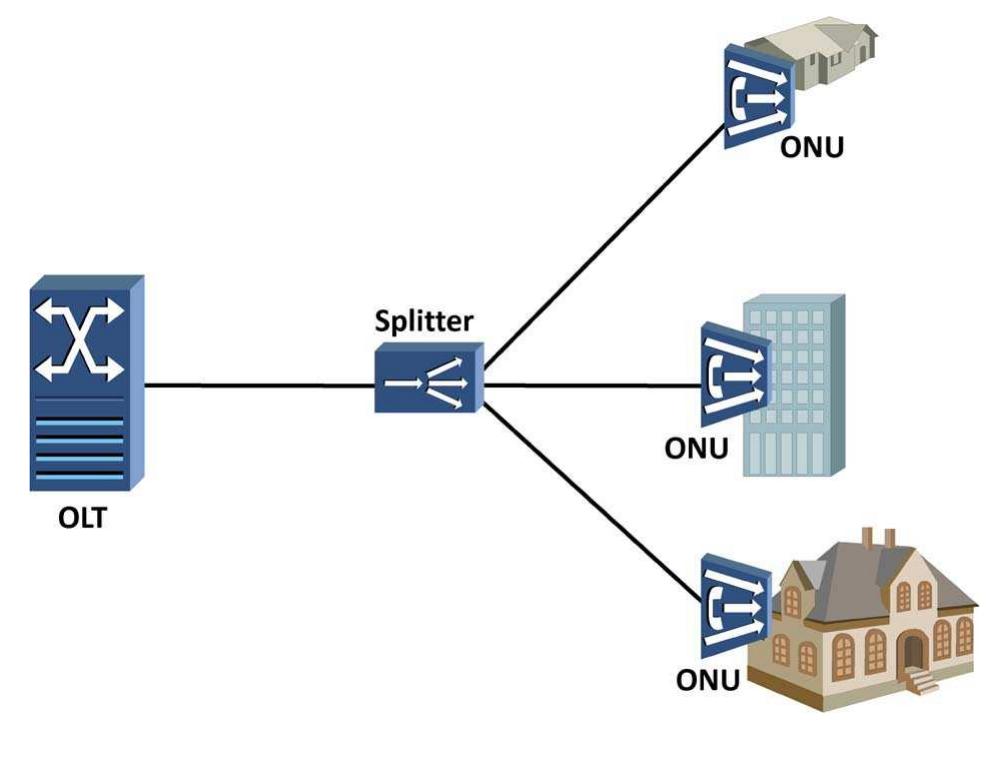
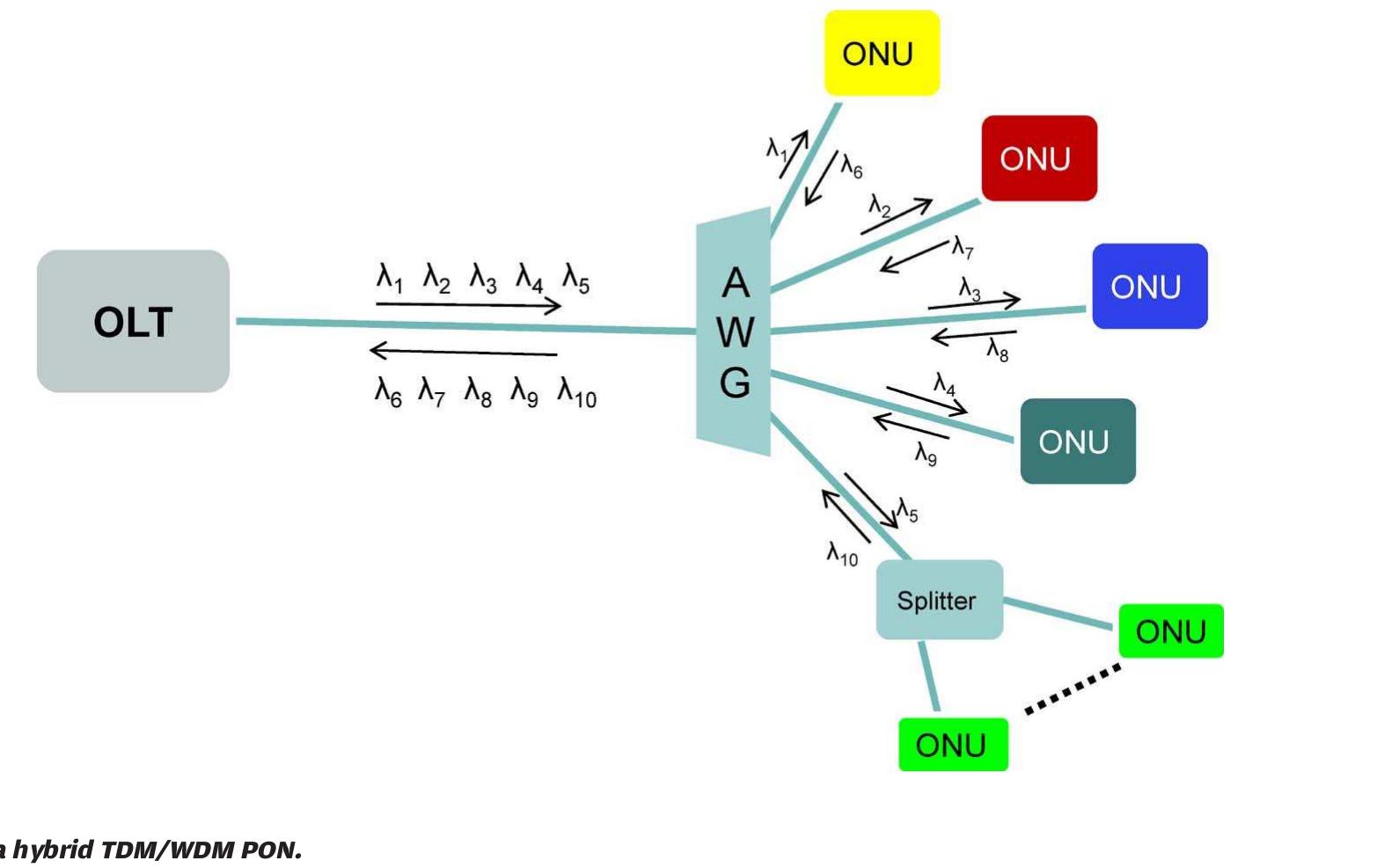
![Because of this asymmetry, WDM PON, which provides dedicated channels per users (per ONUs), is unable to share the network resources efficiently under such nonuniform load conditions. Channels that serve heavy users become saturated, while channels dedicated to light users remain underutilized. In broadcast-and-select WDM PON, all wavelengths reach all ONUs, but each ONU is tuned to a specific wavelength [9], [17]. This architecture has a power splitter at the remote node, which is compatible with the outside plant used by currently deployed TDM-PON architectures. How- ever, ONUs must either use a tunable laser or have a fixed- wavelength laser with a unique wavelength for each PON. The fixed-wavelength lasers are cheaper than the tunable lasers, but using ONUs with different fixed-wavelength lasers entails enormous operational challenges to maintain inven- tories of many different types of ONUs, as well as service issues when a wrong-color ONU is connected to a PON.](https://figures.academia-assets.com/48636093/figure_002.jpg)



![(0 Fig. 1. The application of 3D scaffold-based multicellular tumor spheroids in drug testing. A-D) Confocal micrographs of live/dead staining showing (A) 2D culture and (C) 3D spheroid culture. B) 2D culture revealed significant cell death after CdTe NP exposure. D) Spheroids showed much lower cell damage (especially in the central area) than the cells in 2D culture. E, F) SEM images of (E) 2D culture and (F) 3D spheroid culture at 24h post CdTe treatment. E) In 2D culture most cells were dead with a large amount of cells detached. F) Cells in spheroids experienced much lower cellular damage than those in 2D culture. Reproduced with permission from Ref. [39]. Nanoparticles introduced intravenously have to traverse through 27: the vascular endothelial barrier to reach the target tissue. It is thus im- 27: portant to study the interactions of these carriers with the vasculature 27. Recent innovations in microfluidic technologies can provide novel synthesis and screening methods to address issues of scalability, batch-to-batch variability, and poor predictability that limit the pace of clinical translation of nanotherapeutics [16]. The integration of](https://figures.academia-assets.com/43936505/figure_001.jpg)

![Fig. 3. The application of microfluidic system for studying nanoparticle and cell interactions. A) Fluorescence images showing binding of rhodamine-labeled nanoparticles, without or wit PSMA aptamer, to PSMA-positive LNCaP cell and PSMA-negative PC3 cells under static conditions. The left column shows phase contrast images of the cells and corresponding fluorescenc images of the nanoparticles are indicated in the right column. B) Fluorescence images showing binding of rhodamine-labeled nanoparticle-aptamer conjugates (red) to LNCaP cells und fluid flow conditions at flow rates of 0.25, 1, and 4 uL/min. The cells were stained with Calcein AM (green) and DAPI (blue) to quantify cell viability. C) Quantification of the number « nanoparticles bound to PC3 cells under static condition and to LNCaP cells under both static and fluid flow conditions. (For interpretation of the references to color in this figure legen the reader is referred to the web version of this article.) Reproduced with permission from Ref. [11].](https://figures.academia-assets.com/43936505/figure_003.jpg)
![Fig. 4. Microfluidic platforms provide insights on flow dynamics and shape influence for carrier attachment. A) Stenotic regions have higher shear rate (top) and accumulate more nanoparticles (NP; bottom). B) Influence of particle shape (top) on attachment and accumulation in a 45° bifurcation, showing that disc-shaped particles attach more than spherical particles (bottom). Reproduced with permission from Ref. [63] and [66].](https://figures.academia-assets.com/43936505/figure_004.jpg)
![Fig. 5. The multi-chamber ttCCA device. A) A PDMS ICCA device consisting of three chambers, which represented uterus, liver, and mammary tissues, respectively. B) Measurement of cell viability after treatment with 0.02% Triton. Triton treatment led to full mortality for all cell types. Reproduced with permission from Ref. [101].](https://figures.academia-assets.com/43936505/figure_005.jpg)
![Fig. 6. A) Schematic of the lung-on-a-chip platform developed to study nanoparticle transport. The transport of nanoparticles across the alveolar-capillary interface is augmented signif- icantly when vacuum is applied to the side channels of the lung platform. Adapted from Ref. [13]. B) Schematic of the kidney-on-chip platform with two chambers divided by a porous membrane that separates the ‘luminal’ from the ‘tubular’ space recreating the in vivo conditions in the kidney. Adapted from Ref. [118]. C) The gut-on-a-chip platform includes two com- partments divided by a porous membrane separating Caco-2 cells from the bottom chamber. A vacuum regulator is attached to the side chambers to assess the behavior of the cells under the effect of strain. Adapted from Ref. [55].](https://figures.academia-assets.com/43936505/figure_006.jpg)
![Fig. 7. Studying the nanoparticle (NP) tissue transport behavior using tumor-on-chip platform. A) The schematic of the microfluidic chip assembled on top of a microscope stage. B) Th schematic (left), image (center) and graph (right) showing the effect of NP size on tissue accumulation. Four different sizes, 40 (red), 70 (blue), 110 (green) and 150 (orange) of PEGylate: NPs were investigated. C-D) The effect of NP functionalization on tissue accumulation: C) PEGylated NPs and D) iron-transporting transferring (Tf) protein functionalized NF (For interpretation of the references to color in this figure legend, the reader is referred to the web version of this article.) Reproduced with permission from Ref. [128]. New delivery systems have been proposed in recent years to meet the demand for developing safer chemotherapeutic strategies for breast cancer, one of the commonest types of tumor in women [139]. These include liposomal nanoparticles used to deliver DOX [140] and albumin-bound Paclitaxel delivery system [141]. The anatomy of the mammary gland presents a number of challenges when it comes to clin- ical translation of these theranostics. Two of the major barriers are: the presence of a system of ducts in a branched manner with different sizes 64 65 65 65 65 65 65 65 Several other tumor-on-a-chip platforms have been reported to study the complex tumor microenvironment and to screen drugs [127,130-135]. In a recent study by Kim et al., a fully automated microfluidic system was developed for high-throughput screening of](https://figures.academia-assets.com/43936505/figure_007.jpg)


